
Aam Aadmi Party leader Arvind Kejriwal has filed a fresh affidavit before the Delhi High Court, seeking the recusal of Justice Swarana Kanta Sharma.
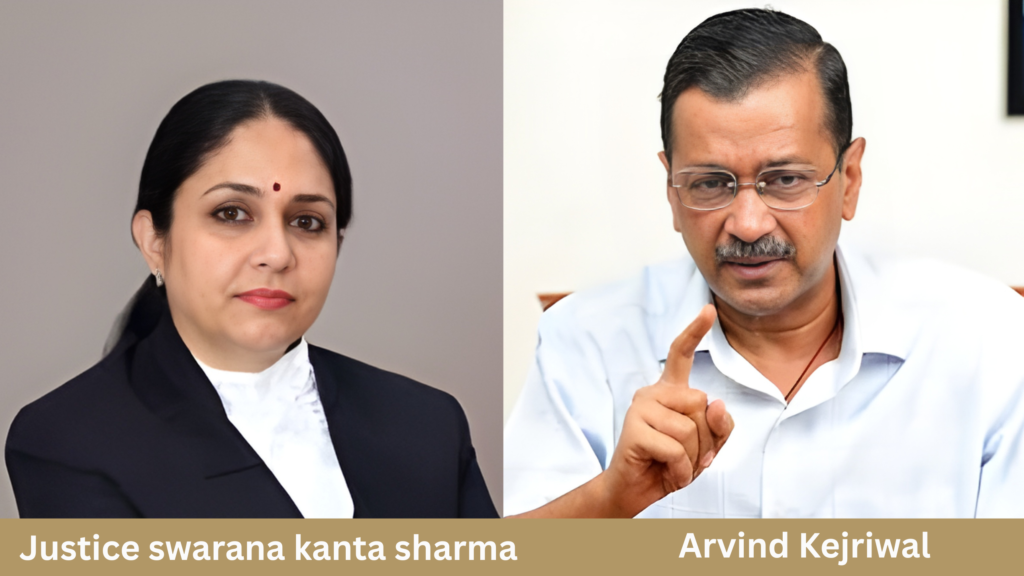
Kejriwal submitted additional facts to strengthen his earlier plea and argued that a conflict of interest arises due to the professional roles held by the judge’s children.
According to the affidavit, both the son and daughter of Justice Sharma are empanelled as central government counsel and are actively engaged in handling government litigation. Kejriwal highlighted that they receive assignments through the Solicitor General, who is also representing the Central Bureau of Investigation (CBI) in the same case.
He contended that this situation creates a reasonable apprehension of bias, especially since the same legal authority appears before the judge while also being linked to the professional engagements of her immediate family members.
The affidavit further emphasized that these positions are not merely honorary but involve continuous legal work, court appearances, and financial benefits, thereby intensifying concerns over judicial impartiality.
Kejriwal also stated that these facts were discovered later through official records and information obtained under the Right to Information (RTI) Act, which prompted him to file the additional affidavit.
“I state that the official public records of the Department of Legal Affairs, Government of India, disclose that Mr Ishaan Sharma, son of Hon’ble Justice is empanelled by the Central Government-Union of India as Group ‘A’ Panel Counsel for the Supreme Court of India. The same official records further show that he has also held empanelment for Central Government work before the High Court of Delhi. I further state that the official records disclose that Ms Shambhavi Sharma, daughter of Hon’ble Justice, is empanelled by the Union of India as Govt Pleader for the High Court of Delhi and is also shown as Group ‘C’ Panel Counsel for the Supreme Court of India.”
The fresh affidavit adds weight to Kejriwal’s recusal request by introducing new factual grounds based on official records. The Delhi High Court is yet to decide on the recusal plea, which remains crucial in the ongoing excise policy case.