Arvind Kejriwal Boycotts Liquor Policy Hearing Before Delhi High Court
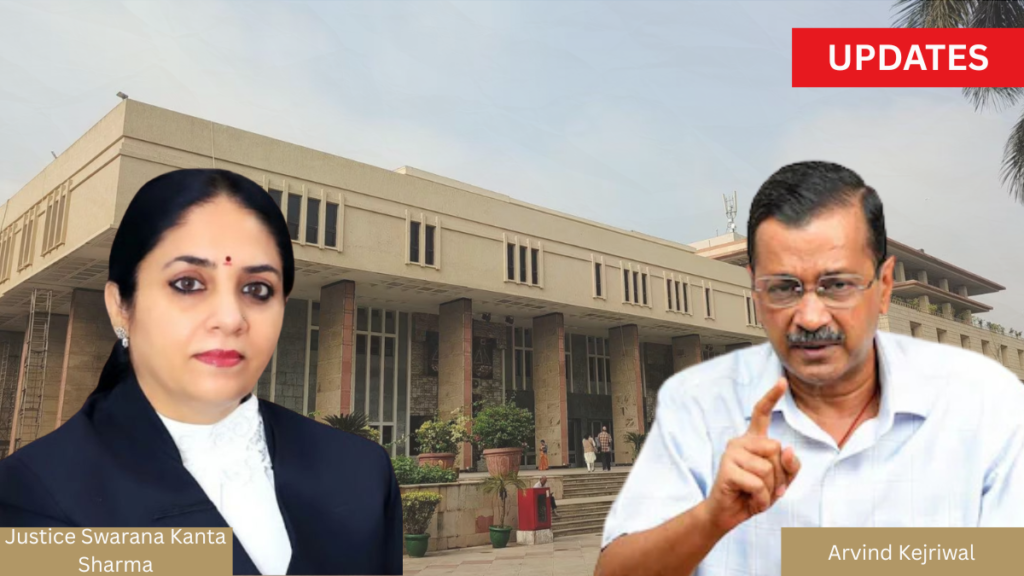
In a major development, Arvind Kejriwal boycotts liquor policy hearing before the Delhi High Court and said he will no longer appear in person or through a lawyer before Justice Swarana Kanta Sharma. He cited a loss of confidence in the fairness of the proceedings and said his decision follows the Gandhi’s path of ‘satyagraha‘.
The Aam Aadmi Party leader wrote a detailed letter to the judge. In the letter, he said he had “lost hope of getting justice” from the Bench hearing the CBI’s challenge in the Delhi liquor policy case.
Arvind Kejriwal Boycotts Liquor Policy Hearing In Delhi HC
The controversy arises from the CBI’s revision petition against the trial court’s earlier order that discharged Kejriwal, Manish Sisodia, and other accused in the alleged Delhi excise policy corruption case.
Last week, Justice Swarana Kanta Sharma rejected Kejriwal’s plea seeking her recusal from the matter.
The court held that a politician cannot be allowed to judge judicial competence based on personal perception. It also said that recusal is an ethical decision and not a legal right that a litigant can demand.
Kejriwal Invokes Gandhian Satyagraha
However, After the court dismissed the recusal plea, Kejriwal informed the Bench that he would not participate in further proceedings.
He said the decision was not made in anger or disrespect.
Instead, he stated that he had chosen the path of Gandhian satyagraha after listening to his conscience.
Moreover, he said that justice must not only be done but must also be seen to be done.
According to the letter, he said the Bench had shattered his faith in receiving an impartial hearing.
Background Of The Delhi Liquor Policy Case
The case relates to alleged irregularities in Delhi’s now-scrapped excise policy.
The CBI and other agencies have alleged that the policy was manipulated to favour certain traders and private entities.
Earlier, a trial court had discharged Kejriwal and several co-accused, citing insufficient material.
Subsequently, the CBI moved the Delhi High Court challenging that discharge order.
Therefore, the matter came before Justice Sharma’s Bench.
Political And Legal Impact
This move could significantly intensify the political and legal battle surrounding the liquor policy case.
On one hand, the court has strongly defended judicial independence.
On the other hand, Kejriwal’s decision to boycott the hearing may trigger further legal consequences.
Meanwhile, the AAP is expected to challenge the developments before the Supreme Court.
The case continues to draw close legal and political attention across India.
Read More:Raghav Chadha Resigns From AAP, Joins BJP in Major Political Shift
FAQs
The Delhi liquor policy case relates to alleged irregularities and corruption in the formulation and implementation of Delhi’s excise policy. The CBI and other agencies are investigating the matter, and several AAP leaders, including Arvind Kejriwal and Manish Sisodia, have been named in proceedings.
Arvind Kejriwal said he would not participate in further proceedings before Justice Swarana Kanta Sharma, citing concerns over the fairness and impartiality of the hearing. He also referred to Gandhi’s principles of satyagraha in his letter to the court.
If an accused refuses to appear in court, the court may continue the proceedings, issue directions regarding representation, or consider further legal steps, depending on the nature of the case and whether the absence is justified under the law. In this case, the Delhi High Court is expected to decide the next course of action after Kejriwal’s non-participation.