
Court Issues Notice to AAP Leaders Over Remarks Against Justice Swarana Kanta Sharma
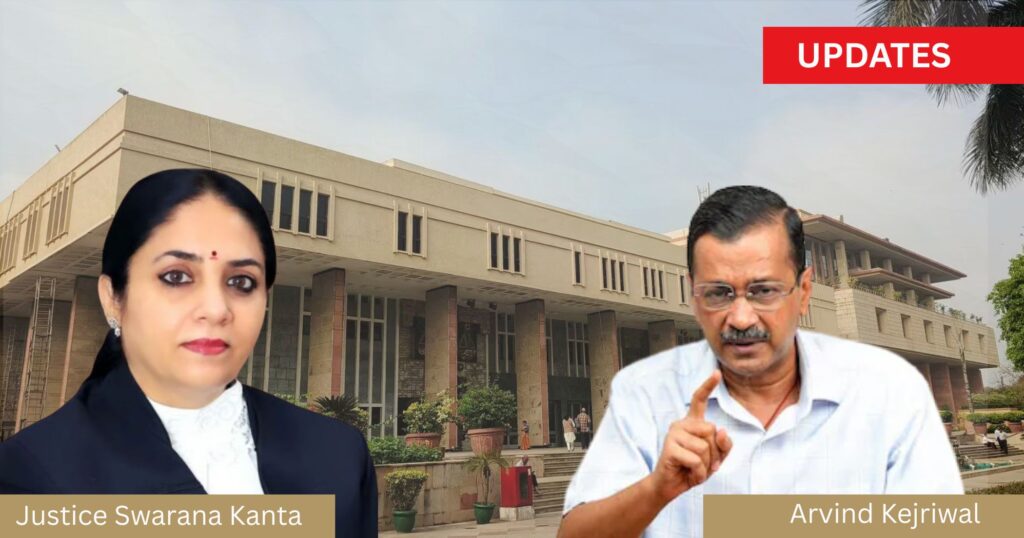
The Delhi High Court has sought replies from Aam Aadmi Party leaders, including Arvind Kejriwal, in a criminal contempt case linked to remarks made against Justice Swarana Kanta Sharma.
A Division Bench of the Delhi High Court issued notices to Kejriwal, Manish Sisodia, Sanjay Singh and others. The Court directed them to file their responses within four weeks.
The matter concerns alleged remarks and social media posts targeting Justice Sharma after proceedings in the Delhi excise policy case.
The Court observed that judges cannot be subjected to “vilification campaigns” merely because a party is dissatisfied with judicial orders. The Bench further noted that such actions may interfere with the administration of justice.
The Delhi HC criminal contempt case began over remarks made against the judge during the excise policy proceedings.
Criminal contempt refers to acts that scandalise the court, interfere with judicial proceedings, or reduce public confidence in the justice delivery system under the Contempt of Courts Act, 1971.
Justice Swarana Kanta Sharma later recused herself from the excise policy matter, but the contempt proceedings will continue separately before the High Court.
The Delhi HC criminal contempt case has once again highlighted the balance between freedom of speech and respect for judicial institutions in India.
Related News
- Manish Sisodia Boycotts Liquor Policy Hearing
- Arvind Kejriwal Boycotts Liquor Policy Hearing
- Delhi High Court Orders X to Remove Kejriwal Court Videos
- Delhi High Court Rejects Kejriwal’s Recusal Plea in Liquor Policy Case
- Delhi HC Rejects Bias Allegations in Judge Recusal Plea
FAQs
The case concerns alleged remarks and social media posts made against Justice Swarana Kanta Sharma during proceedings related to the Delhi excise policy matter.
The Court sought replies from Arvind Kejriwal and other AAP leaders after allegations that certain remarks targeted the judiciary and lowered its dignity.
Criminal contempt includes actions or statements that scandalise the court, interfere with judicial proceedings, or reduce public confidence in the judiciary.