Why the Delhi High Court Rejected Kejriwal’s Recusal Plea
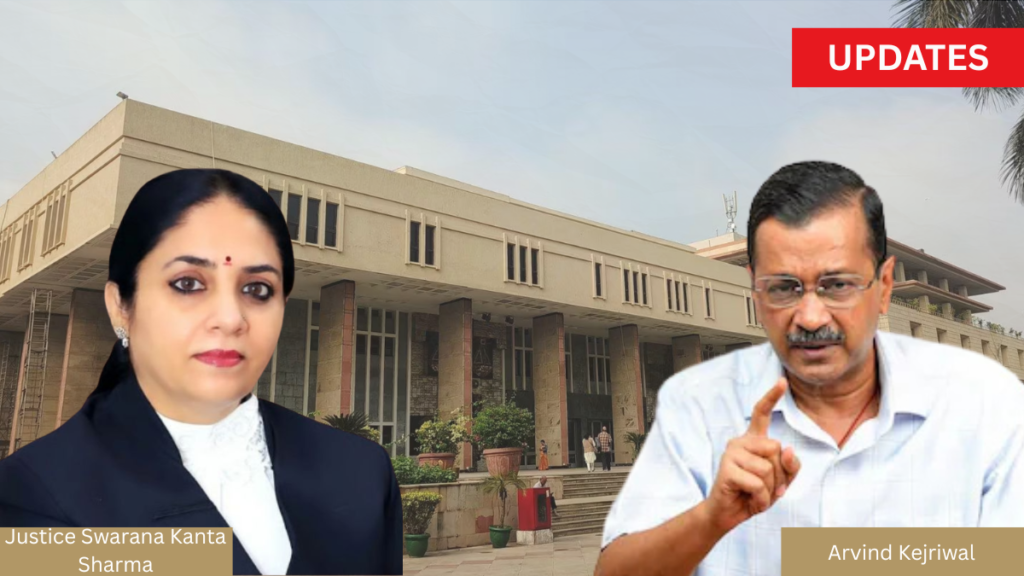
The Delhi High Court rejected Arvind Kejriwal’s recusal plea in the liquor policy case, holding that the allegations of bias against Justice Swarana Kanta Sharma were not supported by evidence. The ruling marks a major development in the ongoing excise policy litigation.
Kejriwal had sought Justice Sharma’s recusal on the ground that her children are empanelled as government counsel and had received matters from the Central Government in recent years. He argued that this created a conflict of interest in a case where the Union and investigating agencies are involved.
Why the Delhi High Court Rejected Kejriwal’s Recusal Plea
Explaining why the Kejriwal recusal plea was rejected, the Court observed that accepting such a ground would require a large number of judges across the judiciary to step aside from cases involving the government.
“This Court wonders that if the test of “apprehension bias‟ relates to whether the children or spouses of judges are empanelled by the Central Government, the Judge should not hear such cases, then a large part of the judiciary, from the District Courts to the highest Court, would have to recuse from hearing such matters.”
Justice Sharma further held that Kejriwal failed to establish any direct nexus between her children’s professional engagements and the present proceedings. The Court clarified that independent professional work by a judge’s family members does not automatically create bias or conflict.
Addressing the social media campaign surrounding the issue, Justice Sharma stated:
“This Court, having served as a Judge for nearly thirty-four years, is adequately trained to pay little heed to what may be said on social media, whatever be the intent or motive behind it. Although, when such campaigns are sought to be brought into judicial proceedings to cast aspersions on the integrity of a Judge, the Court may take note of the seriousness of such attempts, yet judicial decisions are rendered on the basis of law and the record before it, not on social media perceptions.”
The Court also observed that accepting Kejriwal’s argument would mean that judges whose relatives appear for the government could be barred from hearing thousands of matters where the State or Union is a party.
With the Kejriwal recusal plea rejected, the case will continue before the same bench, making this a significant setback for the AAP chief in the Delhi liquor policy matter.
This ruling follows the Court’s earlier decision in the Delhi HC rejects bias allegations in Kejriwal recusal plea matter.