
Supreme Court Finds No Cognizable Offence in ‘Goli Maaro’ Speech
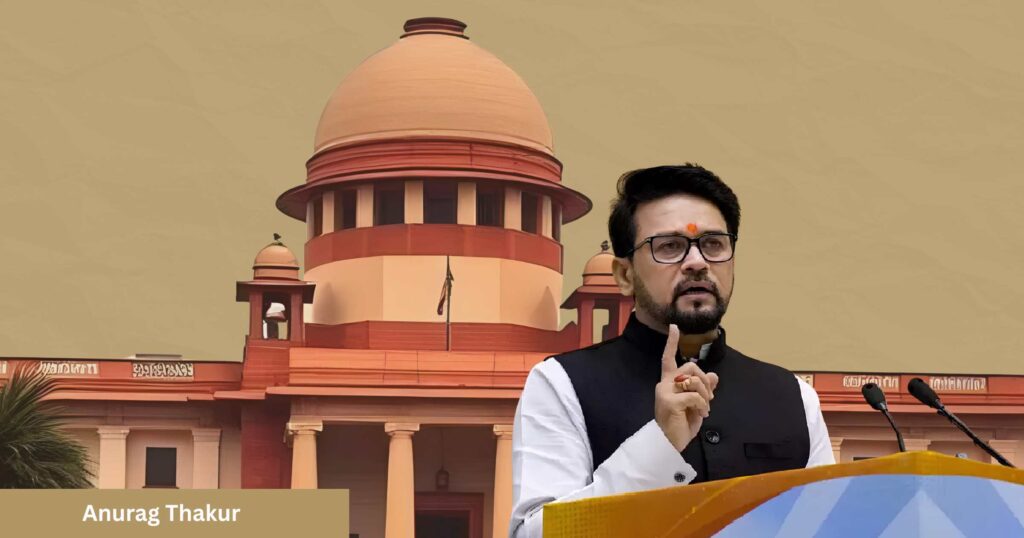
The Anurag Thakur hate speech case came to a close after the Supreme Court dismissed pleas seeking registration of FIRs against BJP leaders Anurag Thakur and Parvesh Verma over speeches delivered during the 2020 Delhi Assembly election campaign.
Justices Vikram Nath and Sandeep Mehta examined the record, upheld the lower court’s findings, and ruled that no cognizable offence was made out, refusing to interfere with the Delhi High Court’s decision.
“Upon a careful consideration of the material placed on record and the status reports, we are in agreement with the conclusion that no cognizable offence is made out,” the Court held.
CPI(M) leader Brinda Karat filed a complaint alleging that slogans at a 2020 rally, including “Desh ke gaddaron ko… goli maaro saalon ko,” amounted to hate speech and incitement to violence.
The Supreme Court said the speeches were controversial but did not target any specific community or attract criminal liability, and found no incitement to violence or public disorder to justify prosecution.
The Court agreed with the trial court and Delhi High Court, refused to order an FIR, and said the allegations did not meet the threshold for a cognizable offence.
Importantly, the ruling forms part of a broader batch of hate speech cases where the Supreme Court emphasized that existing criminal laws are adequate to deal with such issues and that courts cannot create new offences.
With this decision, the Anurag Thakur hate speech case stands dismissed, bringing an end to long-standing litigation arising from the 2020 political speeches.
FAQs
The Supreme Court held that no cognizable offence was made out based on the material on record and dismissed the plea seeking an FIR.
The controversy arose from slogans raised during the 2020 Delhi Assembly election campaign, which were alleged to be hate speech and incitement to violence.
The Court observed that existing laws are sufficient to deal with hate speech and that no new offence can be created without clear legal grounds.